Transforming Risk Management with Insurance Software Solutions
- enkefalos57
- Apr 29
- 2 min read
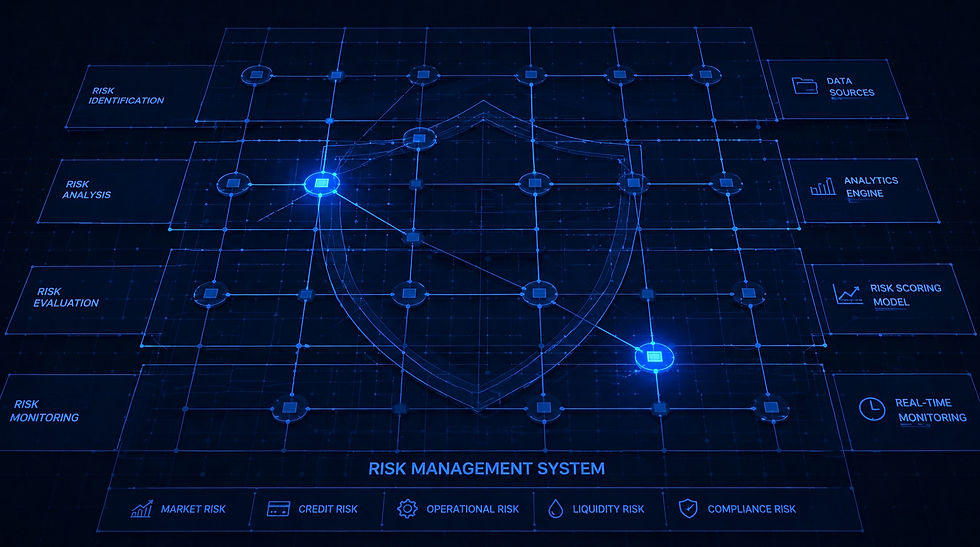
Insurance software integrated with AI in insurance enables businesses to analyze large datasets and detect patterns that indicate potential risks. This improves accuracy in underwriting and claims evaluation. Enterprises are enhancing their risk management capabilities through insurance software that provides real time insights and streamlined workflows. These platforms help organizations identify, assess, and mitigate risks more effectively across operations.
By leveraging AI solutions, organizations can build proactive risk management strategies that reduce uncertainties and improve decision making. This supports long term stability and growth.
Leveraging Data Intelligence for Risk Assessment
Data driven insights are essential for managing risks in modern business environments. Organizations rely on advanced analytics to evaluate risk factors and improve operational resilience.
The use of AI Business Intelligence enables enterprises to transform complex data into actionable insights that support effective risk assessment. These insights help identify vulnerabilities and improve decision making.
By integrating AI Business Intelligence into insurance software systems, businesses can enhance forecasting, detect anomalies, and strengthen risk management strategies.
Maximizing Efficiency with AI ROI Analysis
AI roi analysis plays a crucial role in evaluating the effectiveness of risk management strategies. By measuring key performance indicators such as cost savings, operational efficiency, and risk reduction, organizations can assess the value of their initiatives.
Businesses use AI roi analysis to identify high impact areas where automation and analytics can improve risk management outcomes. This includes optimizing claims processes and improving underwriting accuracy.
Continuous monitoring of ROI ensures that organizations can refine their strategies and maximize efficiency. This approach supports sustainable growth and improved risk control.
Building Trust with Responsible AI Practices
Effective risk management requires trust and transparency in AI driven systems. Responsible AI practices ensure that risk assessments are accurate, fair, and reliable.
Implementing AI governance responsibilities enables organizations to establish clear frameworks for managing AI systems, ensuring accountability and compliance. These practices reduce risks associated with automated decision making.
By prioritizing responsible AI, enterprises can create secure systems that enhance risk management while maintaining customer confidence.

Driving Innovation Through Seamless AI Integration
Integration of technologies is essential for improving risk management capabilities and operational efficiency. Businesses are focusing on connecting systems to create unified workflows.
The adoption of AI integration enables organizations to unify data, processes, and technologies into a cohesive ecosystem that supports advanced risk management strategies. This integration enhances collaboration and decision making.
With strong AI integration strategies, enterprises can improve risk visibility, respond quickly to challenges, and maintain operational resilience. This ensures long term success in dynamic business environments.


Comments